
Adolescence is an experience every adult can look back on. For some, adolescence itself is a privilege. Due to bigotry, abuse, and poverty, many children and their stories are sadly shorter than many would hope. Only a few stories have their time in the limelight, however, and are often ignored or sensationalized for profit. For others, adolescence is a traumatic experience that some wish to never confront while others know it is their only way to heal and hopefully prevent further harm inflicted on them or their peers.
Films from around the world have handled dilemmas that come with adolescence in a myriad of ways. Coming-of-age is one of the many experiences that define the human experience. It is a process that everyone is expected to go through. Not only is it a marker for maturity, but it is ultimately one of the first experiences where a human comes into their own.
While many are probably familiar with films such as Perks of a Wallflower and Paper Towns, there is a wide variety of stories to be shared. Movies with diverse characters, nuanced backstories, and most importantly, intriguing points about childhood, familial relationships, and social dynamics should be celebrated and normalized. How we talk about adolescence is constantly evolving, so just as movies grow older and inform newer generations, these great films are potential precursors to the amazing films about adolescence that have yet to come.
11 The Outsiders
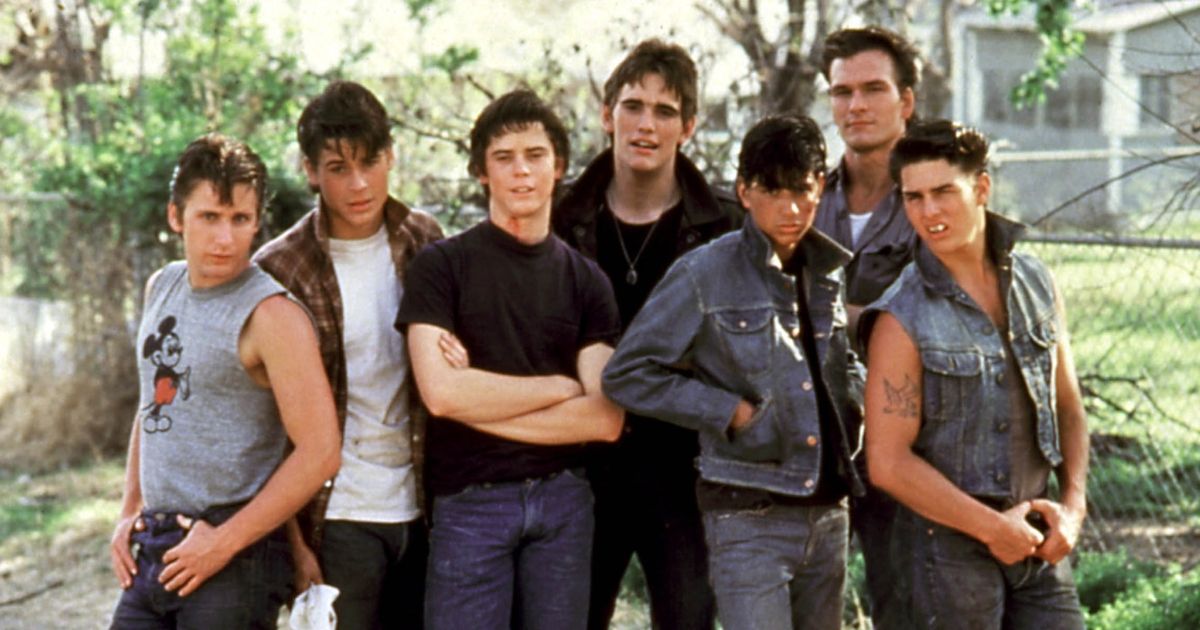
Director Francis Ford Coppola’s visual iteration of the S.E. Hinton novel, The Outsiders, was released on March 25, 1983, to remarkable fanfare. After receiving a handwritten letter from her class of middle school students, Coppola agreed to green-light the film. What many were not privy to was the legacy that Coppola would cement with the film.
The film has been recognized for having an ensemble cast of then-up-and-coming stars. C Thomas Howell, Matt Dillon, Emilio Estevez, Ralph Macchio, Tom Cruise, and Rob Lowe starred in the film, which led to the naming and invention of the “brat pack” style of films. Following the release of the film, many teenage coming-of-age films included members of the brat pack, notably 1985’s The Breakfast Club and St. Elmo’s Fire.
Nonetheless, The Outsiders has been applauded for chronicling the traumatic lives of teenagers living in the United States during the 1980s. Rather than pacifying their teenage characters and thus their target audience, the film exposes movie watchers to a more authentic portrayal of teenage life. Darry and his younger brothers, Ponyboy and Sodapop, were orphans and struggled financially. Despite that, they were still subjected to ostracization and malicious bullying from the “Socs,” or their upper-class peers.
The film excellently captures the essential themes of the novels: class consciousness, puberty, sexuality, and toxic masculinity. While the project is a product of its time, the themes explored in the film will forever be timeless and imperative to interrogate.
10 Blue Is the Warmest Color

The French sapphic classic premiered in 2013 to resounding applause from international audiences. Captivating film festivals, DVD buyers, and current-day streamers alike, Blue Is the Warmest Color has been hailed as one of the most important queer films of the 2010s. The film follows 15-year-old Adèle, who struggles with exploring her sexuality. Under a conservative household and a part of a rather judgmental friend group, Adèle is understandably upset with her circumstances.
After two failed romances, Adèle meets the blue-haired, supportive Emma and the two begin a budding romance. Similar to films like 500 Days of Summer, Blue Is the Warmest Color frames their relationship as a core event in Adèle’s maturity rather than a saccharine happily ever after romance. With a concrete analysis of class, sexuality, and cuisine, Blue Is the Warmest Color remains one of the most beloved films among avid film fanatics.
9 Towelhead

Summer Bishil, famously known for her role as Margo Hanson from Syfy’s The Magicians, stars alongside Peter Macdissi, Toni Collette, and Aaron Eckhart in the coming-of-age film Towelhead (alternatively titled Nothing Is Private). In what is considered her breakthrough performance, Bishil portrays a 13-year-old named Jasira. Jasira hails from Syracuse, New York and her story begins in 1990 during the Gulf War. After confiding in her mother’s live-in boyfriend Barry (Chris Messina) about the bullying she is met with, Jasira shaves her body hair with the assistance of Barry.
Jasira’s mother finds out and forces her daughter to live with her father, Rifat, in Houston. Rifat works for NASA and lives in a house of his own in a cul-de-sac. However, Jasira soon learns how strict and abusive her father is. In Jasira’s navigation of puberty and sexuality, she is introduced to adults both dangerous and delicate.
Alan Ball’s directorial debut (after writing American Beauty and Six Feet Under) is an intricate yet authentic attempt in highlighting one sliver of how coming of age looks like for a multi-ethnic Lebanese-American girl in the early 1990s.
8 A Brighter Summer Day
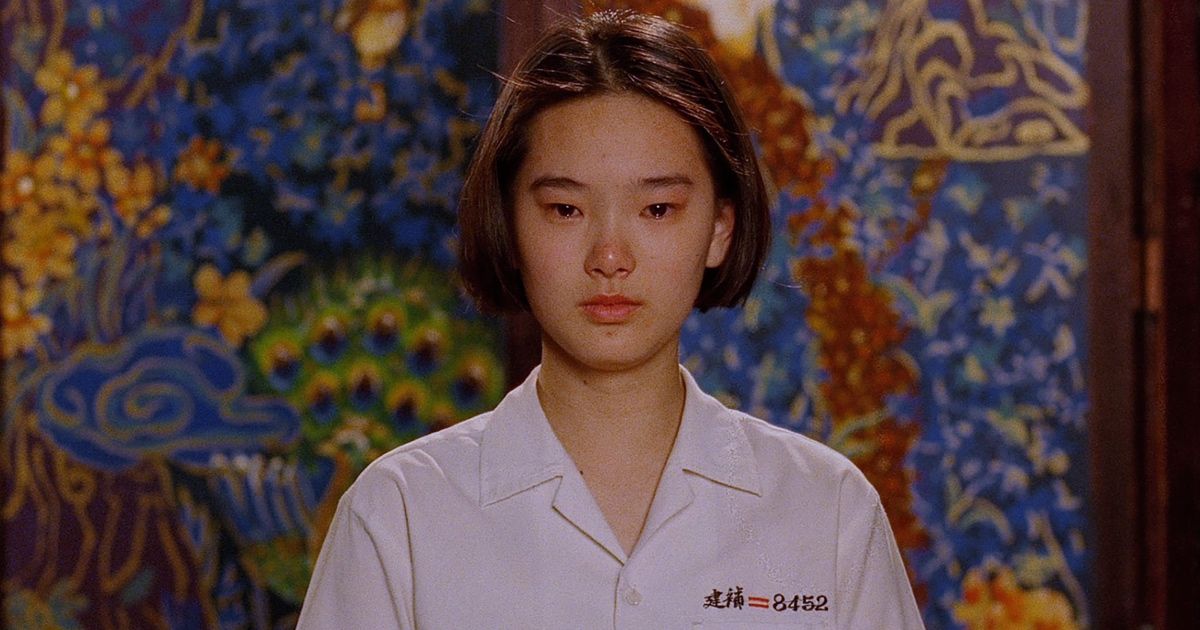
Edward Yang’s A Brighter Summer Day places teen protagonists in an epic crime film. Exploring parental relationships, gang culture, and romance, Yang’s depiction of 1950s Taipei immediately satisfies an audience of dreamers. Regardless of their age, many people have envisioned a world where their childhood dreams were fulfilled in their adolescence. While the film offers a realistic and gritty interpretation of the criminal underground, the adventures that Si’r (Chang Chen) embarks on similarly adhere to the many fantasies and tropes that teens idolize.
The film has been described as multi-faceted and one of the greatest films from Taiwan. Similar to how teens themselves idolize larger-than-life characters and glamorous crusades, they also fall back to Earth and must confront reality. As everyone can concede, the reality is far from being the utopia that dreams, both collective and individual, offer. Si’r, Ming (Lisa Yung), and their peers come to realize such as the film concludes.
Yang was also conscious of the political landscape and how it would impact the film’s characters. Following the Communist Revolution, many families fled to nearby Taiwan. Still reeling from the effects of the civil war, the film documents how Si’r and his family are personally affected by the exodus. In turn, the pressure placed on his parents contributes a good amount of ammunition to the impending conflict and the eventual climax.
Considered a legend in New Taiwanese Cinema, Edward Yang’s teen drama classic seemingly never went out of style. A celebrated classic, A Bright Summer Day continues to get viral praise across the internet, amongst fans and professional critics alike.
7 Eighth Grade

Eighth Grade, starring Elsie Fisher, is a production that chronicles the very hectic experience of an American middle schooler named Kayla. The titular eighth grader has anxiety and often deals with panic attacks during her school year. She is also overly reliant on social media, what some now have referred to as being “chronically” or “extremely” online. It’s a persistent theme of first-time writer/director Bo Burnham, who dissects social media in his depressing, COVID-era comedy special, Inside.
When discussing her role, Fisher likened Kayla’s dependence on social media to that of a religion. Given the increasing trend of Americans abandoning organized religion, it would not shock anyone to realize that social media might be one of the many ways people are trying to replace religious dogma. As up-to-date technology has been introduced in schools and homes, there has been an entirely new generation raised without knowing how the world functioned before the internet’s invention.
Eighth Grade touches on the perils of social media, peer pressure, and misogyny without ridiculing Kayla. The film recognizes that she is a product of her environment and most importantly, that she and many other children can and will grow into more conscious beings without unnecessary reproach from adults or other children.
6 Jinn

Based on writer/director Nijla Mu’min’s experience as a Black Muslim in the Bay Area, Jinn follows Summer and her mother Jade, introducing them as recent converts to Islam. Starring Zoe Renee and Simone Missick, the mother-daughter duo navigate the new terrain in different manners, with Jade being much more eager to initiate her foray into Islam. The conversion process is depicted with much care, combating existing narratives of conversion to Islam being a product of coercion. Instead, the introduction of a new religion seemingly brings solace to Jade.
As for Summer, she understandably struggles with the recent change in her life. Her mother’s conversion comes at the heels of the latter’s divorce as well as the beginning of Summer’s senior year. Nonetheless, she respects her mother’s wishes while also carving out her own path. She regularly attends the mosque and begins wearing a hijab.
However, during her leisure time, she socializes with friends and leaves her hair uncovered. Summer’s exploration of Islam leads to a new relationship with a fellow Muslim classmate named Tahir and a budding fascination with “jinn” an Islamic entity that has loosely inspired Western ideas of “genies.”
Jinn remarkably highlights the many identities, personalities, and ambitions found within the protagonists and their peers. Summer’s adolescence and the introduction of Islam provide viewers with a story that recognizes the personal nature of religion while also depicting the challenges that come with conversion, mutual respect, and coming into one’s own as a teenager.
5 The Kite Runner
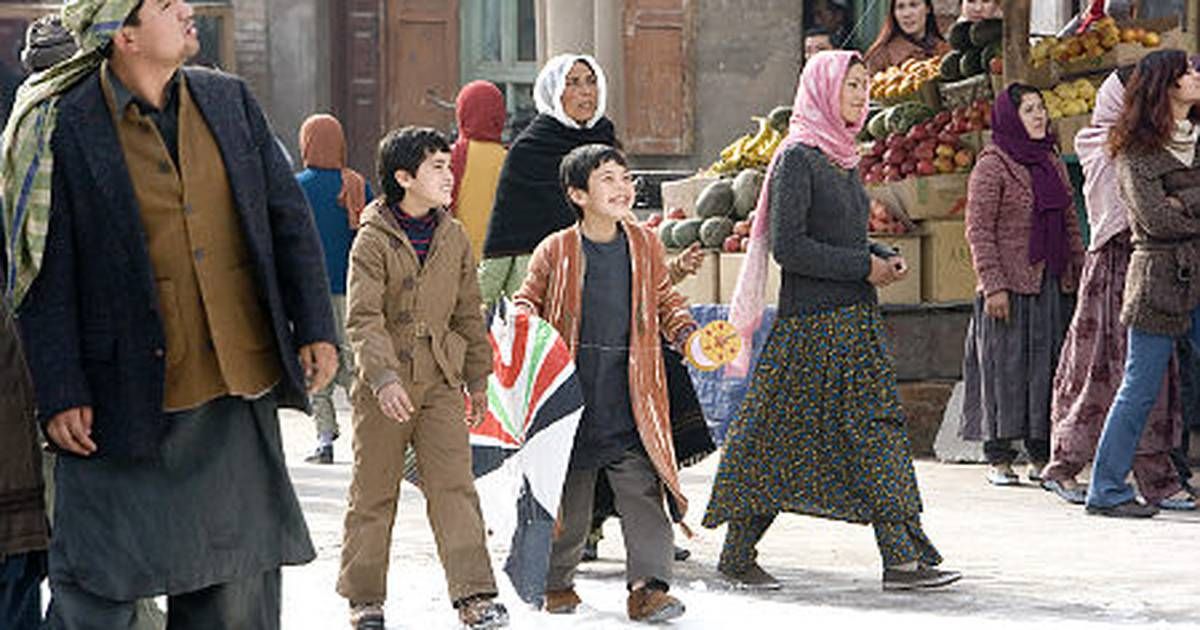
The Kite Runner, the film adaptation based on the book of the same name, follows the life of a young Pashtun boy named Amir. Amir and his father, affectionately titled Baba live in Kabul during the late-1970s. Before the Soviet military intervention, Baba, or the honorific “Agha Sahib” was known around the city as a wealthy philanthropist.
Ali and Hassan are Baba and Amir’s respective servants, however, both are embraced as extended family and cherished friends. The relationship between Amir and Hassan is not as simple as some may believe. While they share a strong camaraderie, classism and prejudice jeopardize the children’s connection.
Alongside being the son of a servant, Hassan is a Hazara, an ethnic group that has faced a lot of persecution in Afghanistan. While Amir does not explicitly acknowledge the apparent differences, he is still aware. After a series of traumatic events, the two friends separate. In a journey toward redemption and rebuilding families in a new light, The Kite Runner does not shy away from grotesque experiences. The film also accomplishes such without being one-dimensional concerning characterization and plot.
4 Jezebel

Jezebel is a semi-autobiographical exploration of a young woman named Tiffany (Tiffany Tenille) and her experience as a cam girl in Las Vegas in 1998. Written, directed, and starring Numa Perrier, the film excellently dissects the titular racial stereotype and how it impacts the protagonists from a financial and psychological perspective.
Following a solemn family reunion and the subsequent passing of her mother, Tiffany and her sister Sabrina face financial insecurity. Facing pressure from Sabrina and her boyfriend, tiffany finds herself working as a cam-girl, using a wig nicknamed “Jezebel.”
The film offers a masterful approach to examining sex work with adolescence and intersectionality in mind. Moreover, the examination of sex work also speaks to a larger discussion about the many ways Black people, Black women, and femmes in particular, are coerced into endangering themselves for the sake of financial security.
As Soraya Nadia McDonald states in her review for Andscape, Jezebel‘s strongest component is the depiction of sex work as legitimate labor. It does not eradicate the unique issues that arise regarding sex work but rather prompts audiences to look at their relationship with their occupation and ponder on the exploitative nature of their working environment.
3 Plan B

Victoria Moroles and Kuhoo Verma star in the coming-of-age dramedy Plan B, directed by Natalie Morales. Sunny and Lupe are two best friends with a relatable yet heartwarming story. Sunny is an Indian teenager compared to the more adventurous Lupe. After persuading her to come to a party, Sunny reluctantly folds and the two reunite later that night for what may be one of the most memorable experiences in their adolescent lives.
Sunny and Lupe meet in the morning and attempt to purchase a Plan B pill. After being denied access, the two embark on an impactful road trip to Rapid City, home of the nearest Planned Parenthood. The adventure itself exemplifies the lengths children and teens are willing to go to solve complicated issues independently.
Due to their reluctance to burden their parents, the two friends serve as a realistic depiction of how teens feel when they make mistakes. Rather than aiding the stigma surrounding adolescent curiosity, the film accepts it as the normal phenomenon it is. As a result, viewers are presented with a heartfelt, hilarious escapade.
2 Persepolis
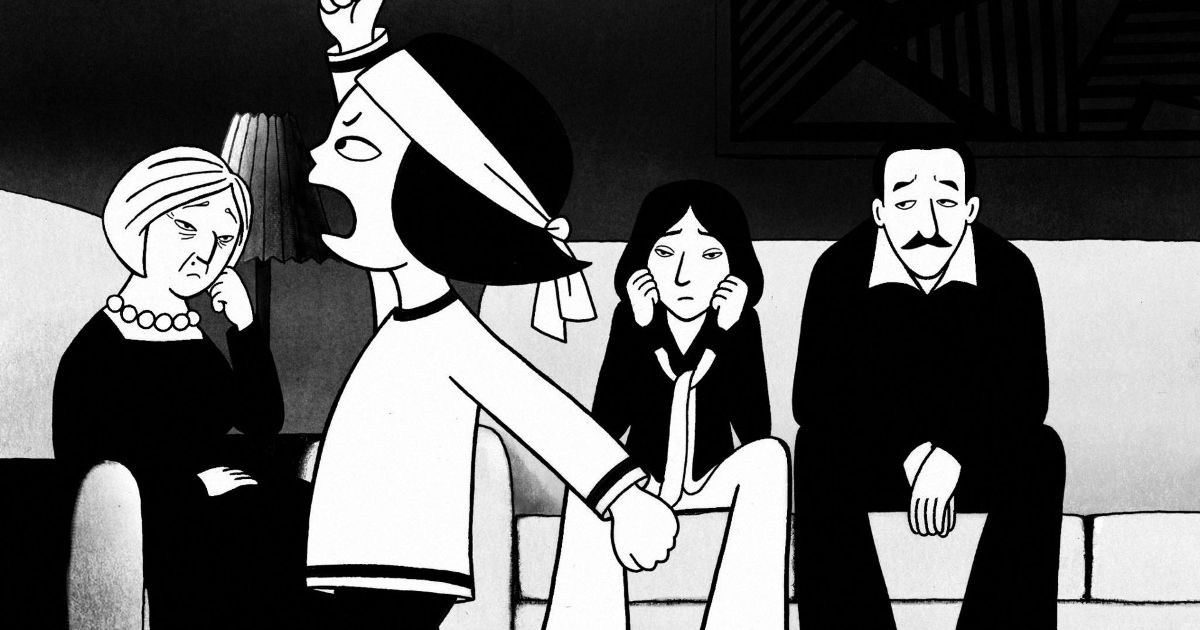
Persepolis, adapted from the graphic novel of the same name, is the invention of Marjane Satrapi. In collaboration with Vincent Paronnaud, Satrapi narrates her childhood and adolescence before, during, and after the Iranian Revolution and the subsequent Iran-Iraq war.
Satrapi perfectly encapsulates the feeling of childhood curiosity and courage. Her family was critical of both the Shah and the subsequent Islamic fundamentalists. The nuanced yet relatable exploration of her parent’s politics dispels popular myths about the lesser of two evils and forces audiences to think outside a political binary.
Following the persecution of several family members and her curiosity getting her into trouble at school, Marjane, affectionately named “Marji,” is sent to live in Vienna, attending a French boarding school. It is then that she struggles with having a mixed identity. While humans in general are complex individuals with many identities, the structural binaries enforced throughout the world have fostered dangerous distinctions. The rather one-dimensional debate between the “East” and the “West” is the main dichotomy explored in Persepolis.
1 Moonlight
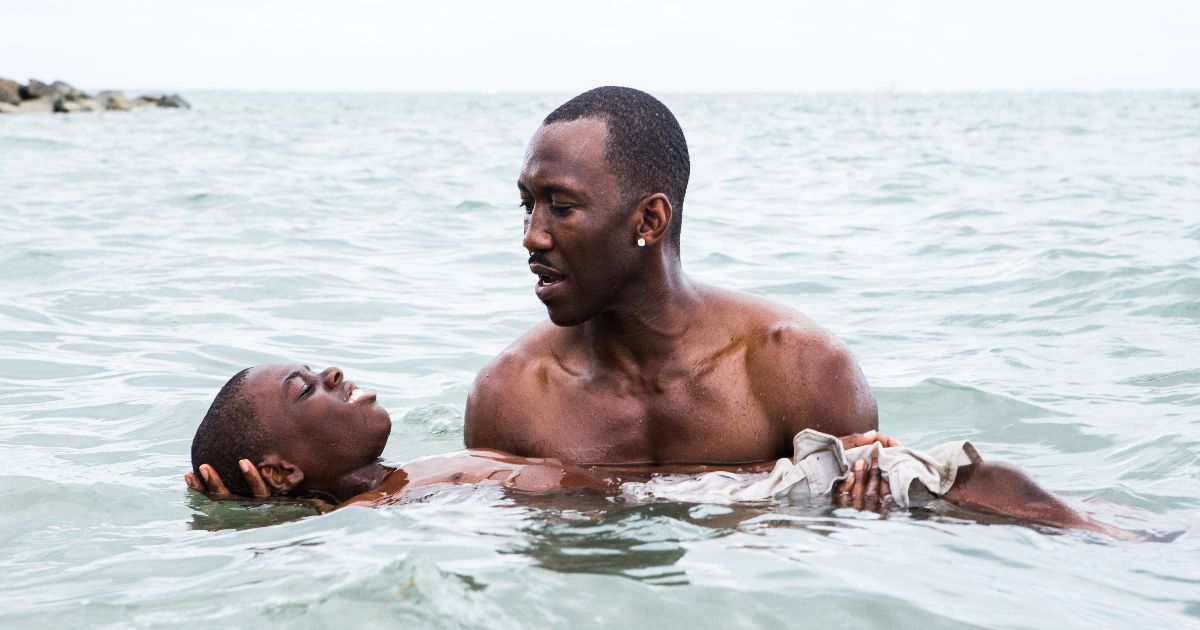
Moonlight, the fantastic creation of Barry Jenkins follows Chiron through three stages of his life: childhood, adolescence, and adulthood. The film, starring Mahershala Ali, Trevante Rhodes, Ashton Sanders, Jharrel Jerome, and Janelle Monae, is a beautiful ode to Black boys growing up in the inner city.
The worthwhile examination of Black masculinity in Moonlight is far from rudimentary, exploring it in multiple facets. Unlike other films which tend to give credence to stereotypes and racist tropes, Moonlight shines a light on the injustices, both structural and interpersonal, that lead Chiron to his destination at the end.
In the first arc, entitled Little, audiences get a first look at how Chiron is introduced to homophobic slurs, coupled with the racial injustice surrounding him. . While this may be a new experience to some, the dramatic yet realistic storytelling brings forth a feeling far too familiar for many. The first arc seamlessly bleeds into the second arc, entitled Chiron. Now watching him as a new high-school teenager, viewers are exposed to the ruthless bullying Chiron experiences. Following an emotional explosion and alarming consequences, the film takes yet another dark yet necessary turn until it crawls towards catharsis.
Moonlight holds a special spot in many lists. It has gone on to win Academy Awards and Golden Globes awards. Actors such as Ali, Jerome, and Monae have been recognized as some of the most celebrated actors. Nonetheless, Moonlight stands with projects such as Pariah, Pose, and Rafiki that do more than simply educate or entertain. These films do both, but also capture seemingly unique perspectives and help normalize them. While these films consider general audiences, such media has an intended audience, one that creatives wish to amplify, admire, and ultimately validate on the big screen.