
It’s March, which means Disability Awareness Month is here—an entire 31 days to celebrate the contributions of people with disabilities, showcase their talents, and remember the importance of inclusive policies and practices. The past couple of years have brought in huge progress for representation of disability in television and film. From CODA’s Academy Award for Best Picture, or HBO’s adaptation of The Last of Us making the decision to depict one of its popular video game characters as deaf, there has been a palpable shift in Hollywood’s efforts to portray disability and create fairer policies for disability rights.
While Hollywood still struggles with ableism and policies that discriminate against the disabled, in honor of Disability Awareness Month, let’s celebrate those people and projects that have brought the industry one step closer. Here are eight bingeworthy series that are actively fighting ableism, both on screen and off.
7 Sex Education
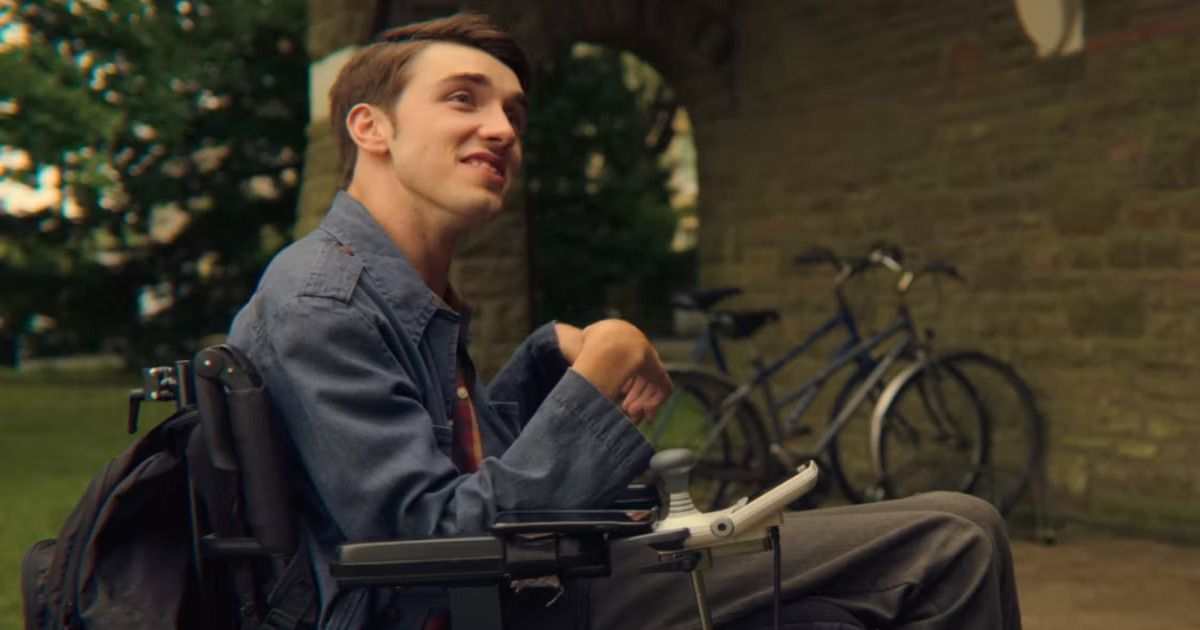
Sex Education follows Otis, a socially awkward and sexually inexperienced high school student and his journey becoming his school’s secret sex therapist. The show made waves with fans all across the world for its hilarious writing, fantastic acting, and destigmatized conversations around sex. Season 2 introduced Isaac Goodwin, played by Ilen Stohl, a paraplegic teenage boy who lives in the same campsite as rebel leading lady Maeve Wiley.
Issac is sarcastic, witty, artistic, and unapologetic. While disabled characters are often stereotyped as overly fragile, Isaac refuses to pity himself or let others pity him. When he attends a house party and is met with a steep flight of stairs, he doesn’t even flinch before saying ‘No, I’m going to this party, you’re going to carry me down, I don’t care.”
Isaac is a mischievous troublemaker meets boy-next-door, a combination that has Maeve crushing hard, a blooming romance that reaches its peak in episode four. In between ear-kissing, undressing, and pretty hot canoodling, the show approaches sex with disability in a way that feels normal and natural. On shooting the scene, Ilhen explains that “the way it speaks to how sex isn’t always about the physical stuff but the intimate act of opening yourself up to one another.”
6 Deaf U

In the divisive times we live in, who doesn’t love to escape with a little reality TV? The creators of Deaf U agree, and focused on creating a reality tv show that encompasses all the drama and scandal plot devices you love with the addition of one key element. The series follows several students of Gallaudet University, a college for the deaf and hard of hearing, and the complex social ecosystem of the school—cliques, shifting relationships, sex and dating, social media, and the relationships built within the deaf community.
Deaf U depicts a unique environment in which being deaf is the normal, and being able to hear is the anomaly. This was true inside and out of production; 30% of the crew, 60% of the story department producers, and 30% of the editing team were deaf or hard of hearing. Produced by Nile DiMarco, the show was created to help the outside world understand deaf people, “so hearing audiences could learn their deaf experience without it being preached.” And while the customs and practices of deaf people might be unique to viewers who aren’t familiar, the gossip, parties, and fights that break out between the show’s stars are not.
Deaf U shatters the mold of our expectations of deaf people. From exposing the hierarchy that exists in the community, with the “elites” being a group whose deafness has been in their family for generations, differences in how people speak, the various levels of hearing loss present, to the not-so-subtle hook up culture that leaves many of its victims crying, Deaf U ultimately gets at the humanity of the disabled community. They, like humans everywhere, are not inherently good or evil, but a mixture in between. The show is as entertaining and titillating as it is authentic.
5 Everything’s Gonna Be Okay

If you’re looking for a heartwarming comedy, then your best bet is to check out Josh Thomas’s Everything’s Gonna Be Okay. The story follows the lovable and klutzy Nicholas, played by Thomas, as he learns to take care of his teen half-sisters, Matilda, who has autism, and Genevieve.
A classic coming-of-age story, broaching topics that any growing teen is curious about; sex, dating, family relationships, with the addition of the ableism Matilda and her family now experience. Kayla Cromer, who plays Matilda, is able to capture an en empowering representation of the lived experience of autism.This authenticity combats stereotypes that harm autistic people; going beyond just depicting how an autistic person behaves, Everything’s Gonna Be Okay is able to show the diversity of abilities, interests, and personalities of the disabled and actively show viewers what it means for family and friends to be supportive.
When Matilda starts thinking about the fact that she is heading off to college soon, she decides to get drunk for the first time. In the comfort of her own home, with her brother and his boyfriend, Matilda experiences a fun, carefree life of a teenager, a perfect example of how people with autism still want the same things, and enjoy life, the same as everybody else. Everything’s Gonna Be Okay proves that casting the individuals who you are trying to represent matters.
Thomas, who himself has autism, made the explicit choice to cast autistic people for the roles, going against Hollywood’s tendency to cast able-bodied individuals in disabled roles. All in all, Everything’s Gonna Be Okay is a hilarious and heart-warming show definitely worth the watch.
4 Special
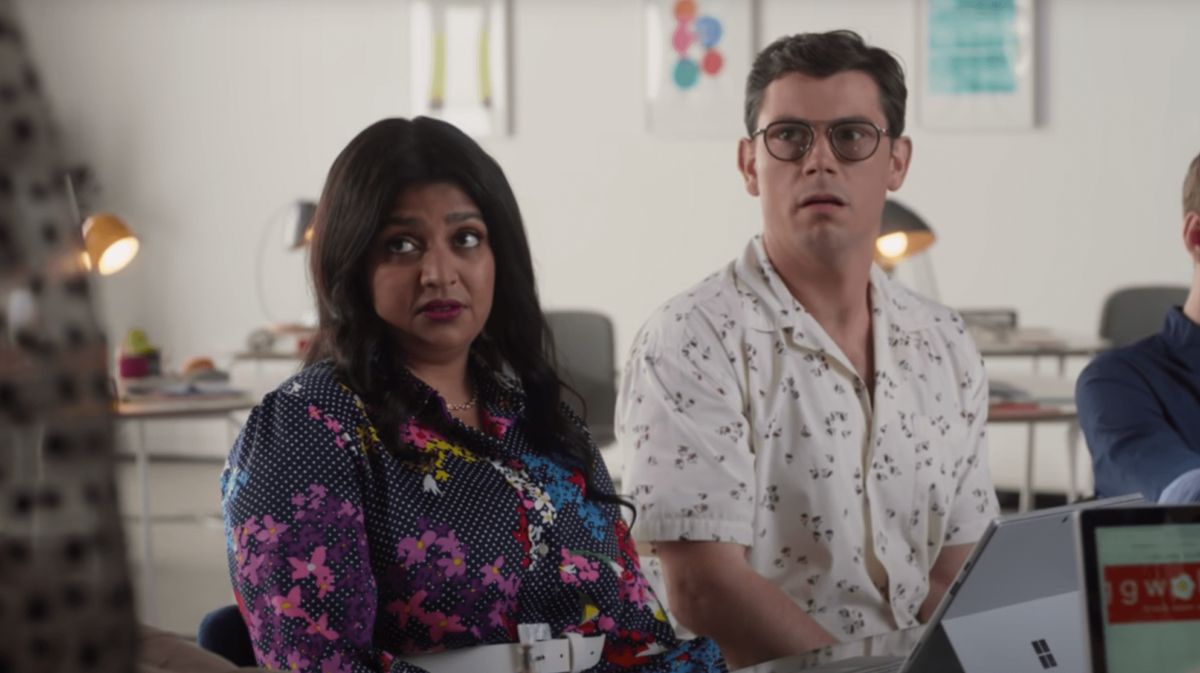
After reading Ryan O’Connell’s I’m Special: And Other Lives We Tell Ourselves, Jim Parsons saw the potential for this book to be adapted for the screen. Special follows Ryan Hayes, a gay struggling 28-year-old with cerebral palsy who, when starting a new career at an up-and-coming blog, lies to his peers telling them his body challenges were due to a car accident he had several years prior.
Based on a true story, the show, Special demonstrates what it means to come out of the closet not once, but twice. After finally feeling comfortable in his own queerness, Ryan struggles accepting his cerebral palsy, opting to lie to avoid his own disability, and to gain acceptance from those around him. His disability becomes a secret that separates himself from the friends he’s been able to cultivate. As he slowly begins to be honest with himself and his loved ones, Ryan learns the harm his closeting has imposed on himself, and how embracing his reality was a beginning to a whole new type of living.
A half-fiction, half-autobiograophy from creator O’Connell, Special is fun and witty, using its rom-com genre to normalize the experience of a man with cerebral palsy as he journeys through the world of career, sex, and relationships. The show refuses to fall into the stereotype traps set forth by Hollywood; when boyfriend Carey bends down to tie Ryan’s shoes, it’s more awkward than romantic––an in-your-face example of how able-bodied people tend to infantilize the disabled. When Ryan has sex for the first time, the experience is gentle, leaning towards vanilla, and completely free of emotional trauma. It’s relaxed and gentle, reminding the viewer that Hollywood’s castration of disabled people is more a conditioning than a reality. Ultimately, the show is a heartwarming romance definitely worth a watch.
3 Raising Dion

Based on the comic book by Dennis Lui, Raising Dion is a nine-episode series on Netflix with two phenomenal disabled leads. The story follows Dion, a boy with superpowers, and his single mother Nicole, as they attempt to live safely and keep his powers a secret. Coming to a new school, Dion, a black kid with ADHD and chronic asthma, begins to build a relationship with Esperanza, a hilarious wheelchair user.
The show is insightfully real with its approach to ableism. In many scenes, Dion is like the viewer in his approach to Esperanza; a little ignorant and needing some education. As Dion continues to make ableist mistakes with Esperanza, and she isn’t afraid to correct him. When Dion uses his powers to make Esperanza fly, without asking her permission first, she isn’t afraid to let Dion know how she feels. An outlandish artist and comedian, Esperanza, played by Sammi Haney, challenges the stereotypical representation of wheelchair users as timid and afraid of others. Her three-dimensional character, and her relationship with Dion, act as key demonstrators of what friendship based on integrity looks like. Filled with action and a lot of love, Raising Dion is a quick binge well worth the watch.
2 Jessica Jones
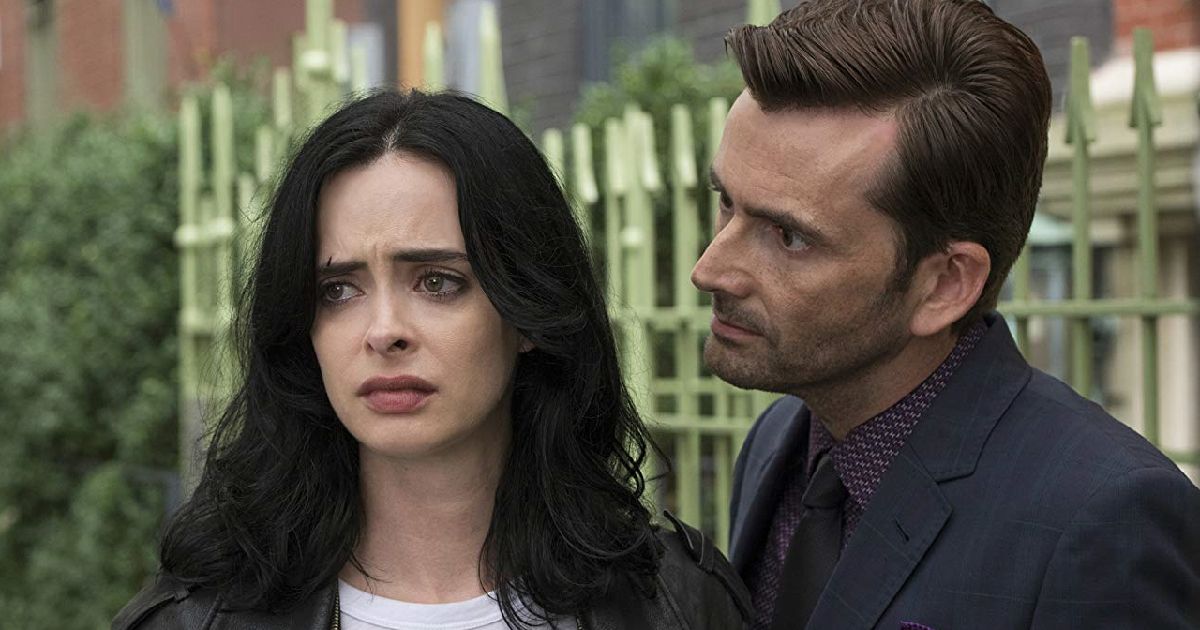
Marvel has been putting out some amazing TV shows, and Jessica Jones is definitely one to add to the list. But besides being a superhero with amazing powers, Jessica Jones also acts as an important representation of those with invisible disabilities. After an incident with villainous Kilgrave in which she had to kill someone, Jones retires as a superhero to become a private investigator. Kilgrave, who has kinetic powers, forced Jones to have sex with him and kill another person.
Jones acts as a quintessential example of the challenges of PTSD. An invisible illness with ruinous effects, PTSD is generally viewed as something experienced by those men who have experienced war, terrorism, or natural disaster. This conditioned belief ignores that women are found to be twice as likely to develop PTSD, and can develop for far seemingly-less dramatic reasons; car accidents, being diagnosed with an illness, bullying, or witnessing a traumatic event.
Jessica Jones does a great job of depicting the visceral challenges of PTSD; Jones suffers from flashbacks that come on suddenly and violently, and which plague her throughout the show’s two seasons. She struggles to sleep, and often finds herself feeling isolated from those around her, and struggles with guilt over having PTSD though she has no physical symptoms. A high-functioning woman, she isn’t given the social permission to address her PTSD for what it is. She writes off therapy and doctors as “quacks,” reflecting the very real problem that many times doctors don’t believe women when they say they’re in pain until there is physical indication.
Instead, she focuses on healing herself through her work and the relationships she is able to foster. When her partner Malcolm asks her about her experiences, and Jones explains “There’s always someone who’s had it worse. Someone’s life who was ruined worse”, Malcolm soothes her thought process by simply stating “It’s not a competition.”
And yet, while Jessica Jones captures a woman reckoning with her mental struggles, it does not flatten her character to just her PTSD. Jessica Jones is a hard drinking, smart, intense, and strong woman, all of which are characteristics she held before having PTSD and still upholds with it. The show thus demonstrates how, even with a crippling condition, Jones is still whole.
1 Years and Years

BBC’s drama Years and Years is an outrageous social commentary on the state of technology and media consumption in the world. Written by Doctor Who’s Russel T. Davies, Years and Years is a fictional what-if depicting the 15 years leading to Brexit and how the decision moves Britain into a turbulent techno-horror world ruled by a soon-to-be-dictator. With star Emma Thompson as our outlandish rising politician, the show has a way of humanizing a people, even as they push their country to the brink of collapse. This is especially true for the character Rosie Lions, a woman born with spina bifida which requires her to use a wheelchair. Played by Ruth Madeley, Rosie is an upbeat woman and unbothered by being in a wheelchair. She is confident, exuding humor, flirtation, and a care-free attitude that balances out the tone of the show.
Rosie’s character also allows for the show to explore taboo topics in society; She has an intimate scene with a man named Noel, in which she depicts her sex life in an unabashed and forward way. The scene is awkward and hilarious for all the right reasons, capturing how being intimate with someone for the first time can lead to some pretty strange encounters. (We won’t give any spoilers, but the scene goes wrong in some seriously unexpected ways.)
With this change in government, Rosie also has to answer some pretty big questions, like whether we should develop a “cure” to end disabled children. Rather than focusing on what media deems as progress and improvement, Rosie acts as an important stopping point: asking audiences when we should campaign, not for medical practices but for inclusivity.
Hilarious, interesting, and entertaining all on their own, you’ll find yourself not only learning about the disabled community, their ways of thinking, and how our world impacts their everyday-lives, but also reflecting on your own life. From how you move through this world, to how you speak to yourself, to how you interact with those around you, these trailblazing series might just have you rethinking your own day-to-day life.